
Start cold.
Finish stronger.
Ice baths feel intimidating on day one. They should not stay that way. Pick your level, follow six weeks, and let the cold become something you look forward to instead of something you survive.
Find your starting point.
Most people start too cold and quit, or start too warm and get bored. Answer honestly and we will put you in the right place.
Six weeks.
One step at a time.
Every week has a temperature, a time and a job to do. Tap through them, mark them off, and the page remembers where you got to.
Progress is saved on this device only.
A coach for the breath.
A clock for the cold.
Two tools that work on your phone at the side of the bath. No app, no account, no signal needed once the page has loaded.
Follow the orb
Pick the technique your week calls for. Breathe in as it grows, out as it shrinks.
Count it down
Set your target, get in, and let the cues carry you through the hard middle.
Breathe normally in the water. No breath holds, ever.
Before. During.
After.
The plan tells you what to do this week. This tells you what to do in the next fifteen minutes.
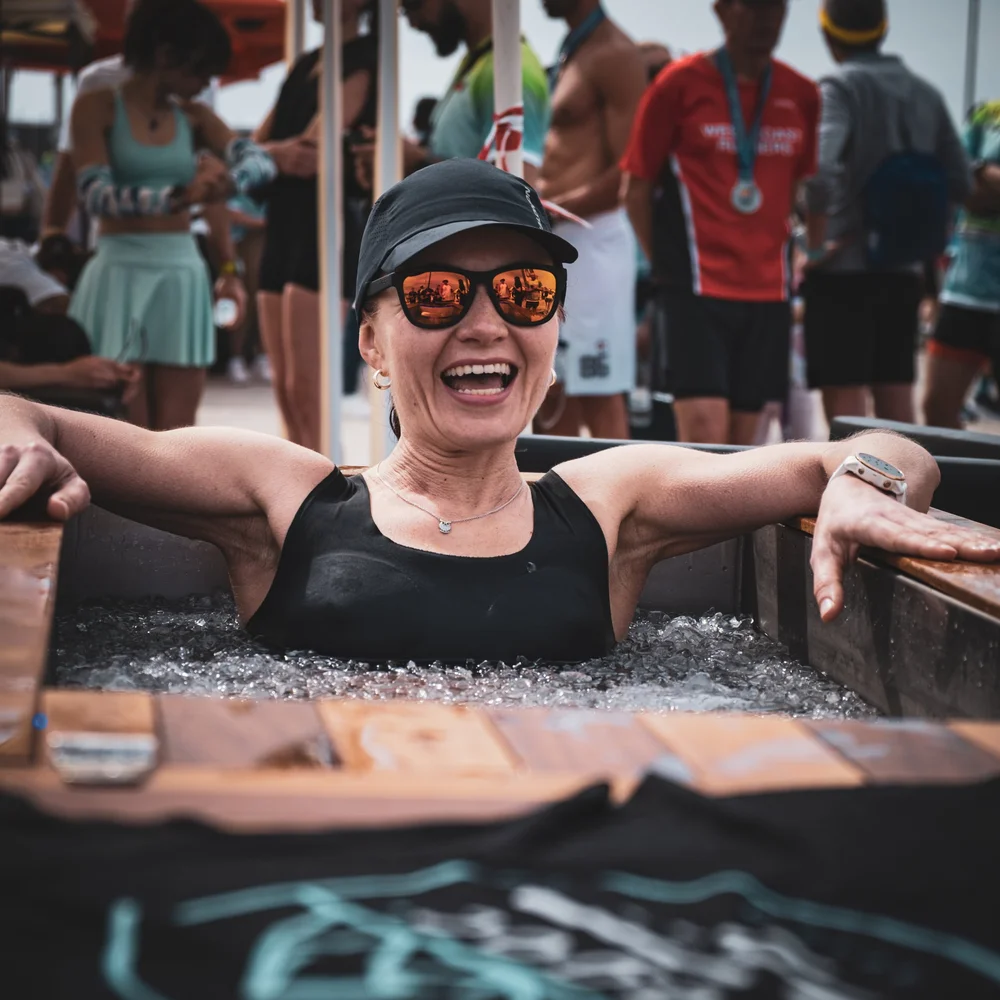
Before you get in
- Check the water temperature. Guessing is how people go too cold too early.
- Do your breathwork sitting down on dry land, then stop. Never in or over the water.
- Set your timer before you step in, not while you are shivering.
- Have your towel and dry clothes within arm's reach.
- Nothing on an empty stomach and nothing after alcohol.
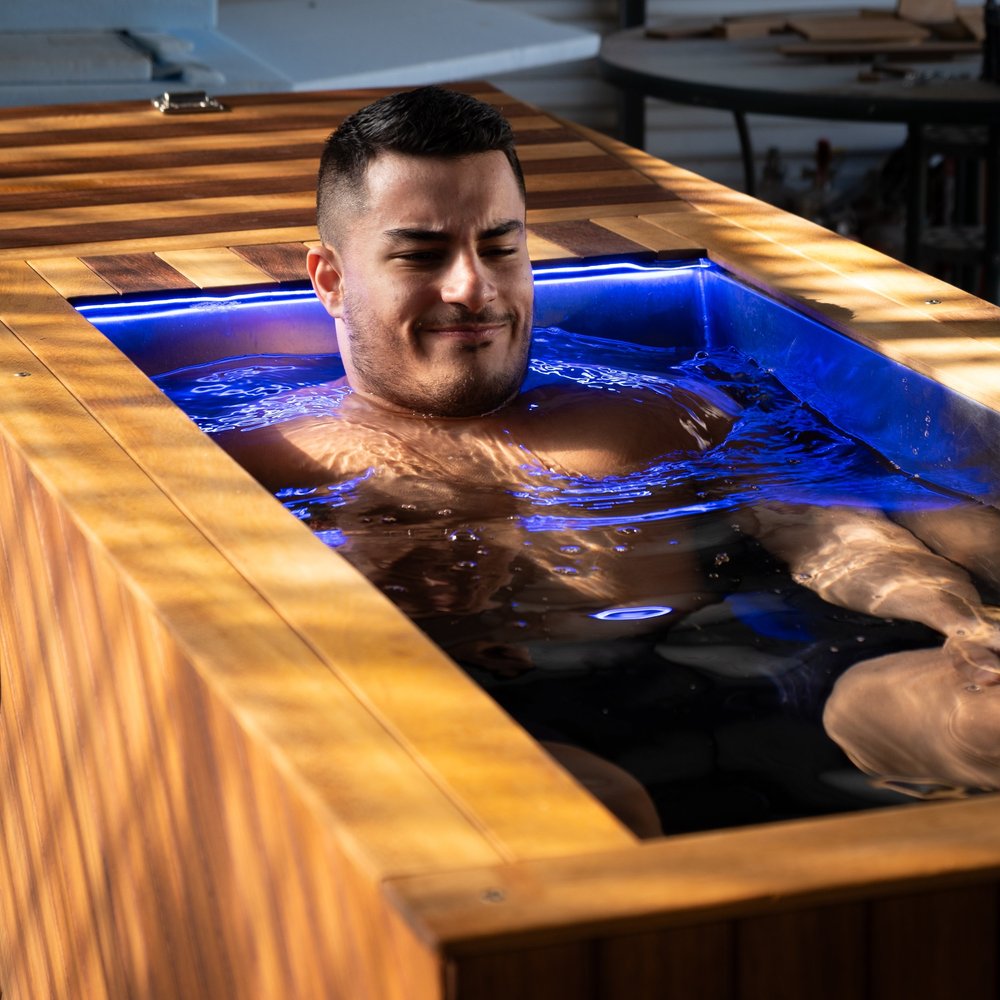
While you are in
- Enter slowly and sit down. No jumping, no diving, no dunking your head early.
- Expect the gasp. Give it one long exhale and let the first 30 seconds pass.
- Keep hands and shoulders out at first if you need to, then lower them in.
- Stay still. Moving stirs the warm layer off your skin and makes it harder.
- Get out early if you feel dizzy, numb in the fingers, or genuinely panicked.
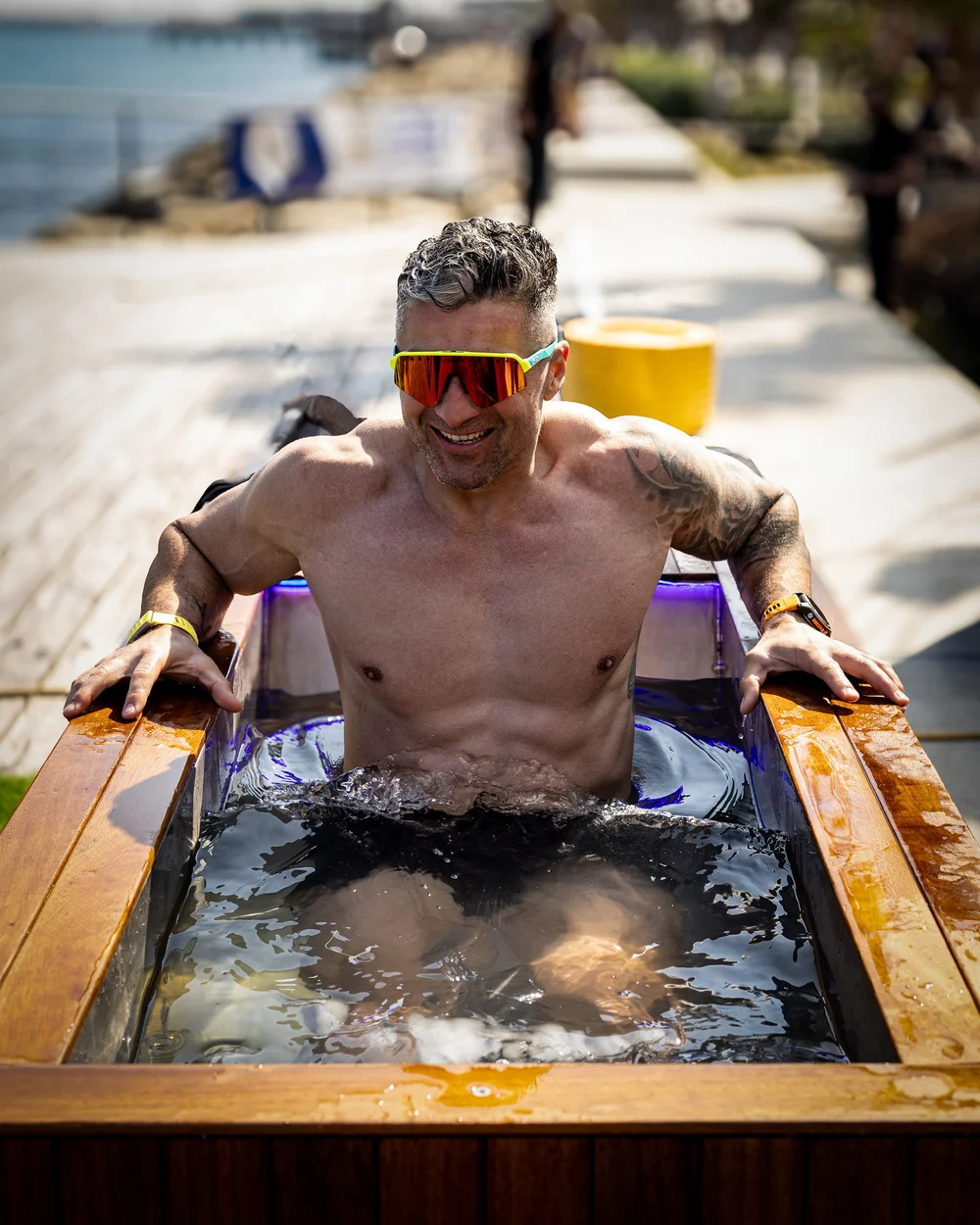
After you get out
- Dry off properly and dress warm, starting with your top half.
- Rewarm on your own. Walk, do air squats, move gently for 10 to 15 minutes.
- Skip the immediate hot shower or sauna if you are after the metabolic benefit.
- Shivering for 10 to 20 minutes is normal. Shivering an hour later is not.
- Note the temperature and the time. Next week only works if you know this week.
Eleven minutes.
A whole week.
Around eleven minutes of deliberate cold across the week, split over two to four sessions, is the target most of the research converges on. More time is not more benefit. Consistency is.
- First thing in the morning, for the alertness and mood lift
- After endurance work, a match, or a long day on your feet
- Between back-to-back training days, when recovery beats adaptation
- On rest days, at any time that suits you
- Before a session, if you want to walk in switched on
- You lifted for size or strength in the last 4 to 6 hours, cold blunts that adaptation
- You are already ill, run down, or short on sleep
- You have had alcohol, at any amount
- You are alone and going below 10°C
- You are within a couple of hours of bed and the cold keeps you wired
Cold is a stimulus, not a dare.
Almost everything that goes wrong in cold water comes down to one of three things: someone held their breath, someone was alone, or someone had a condition they did not know the cold would provoke. None of the benefits on this page are worth any of that.
Never do these
- Never hyperventilate or hold your breath in or over water. This is the mechanism behind shallow water blackout and it has killed strong, experienced people. Breathwork happens on dry land, finished, before you get in.
- Never plunge alone below 10°C.
- Never plunge after alcohol or recreational drugs.
- Never put your head under in very cold water.
- Never treat a longer session as a better one.
Speak to a doctor first if you have
- Any heart condition, arrhythmia, or a pacemaker
- Uncontrolled high or low blood pressure
- A history of stroke or of fainting
- Epilepsy or a seizure disorder
- Raynaud's, cold urticaria, or cryoglobulinaemia
- Pregnancy, recent surgery, or an open wound
- Peripheral neuropathy or reduced sensation in hands and feet
Get out immediately if you feel chest tightness, dizziness, confusion, loss of coordination, or numbness that spreads rather than settles. Uncontrollable shivering that continues long after you have dried off and dressed warm needs attention, not another round.
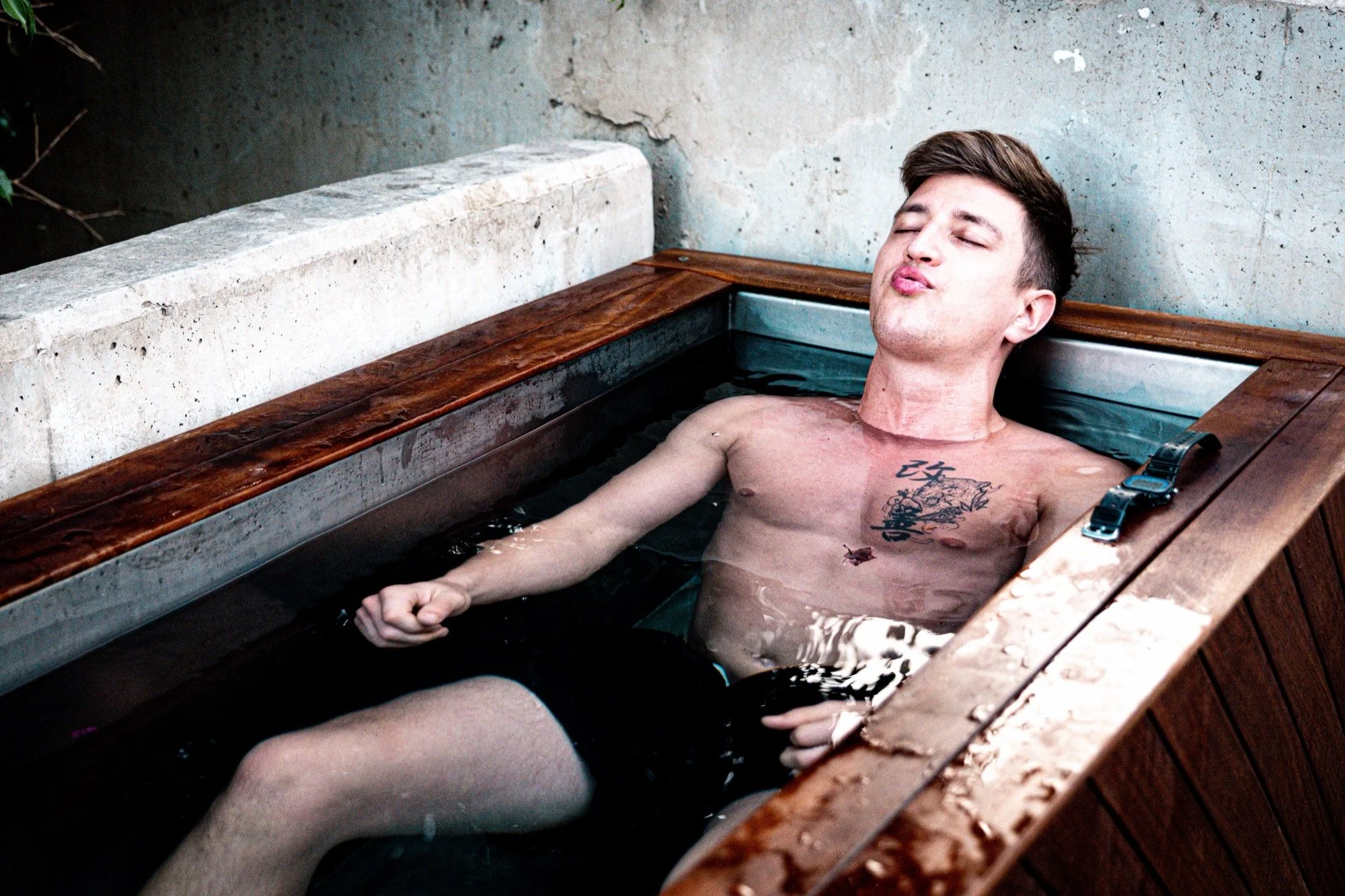
You are not trying to beat the cold. You are learning to stay calm inside it.
The mental side does
half the work.
Ten things to bring with you into the water. Tap any of them to open it up.
Set clear intentions
Control the breath
Visualise success
Use positive affirmations
Embrace discomfort
Stay in the present moment
Cultivate a strong mindset
Release expectations
Learn from every session
Celebrate the wins
Six mistakes
almost everyone makes.
Every one of these is easy to fix, and every one of them is why people quit in month one.
Starting at zero degrees
The coldest first session is the one that becomes the last one. Nothing about 2°C on day one is more effective than 14°C.
Start at 12°C to 15°C and earn the rest.Chasing the clock
Ten minutes at a mild temperature is not braver than three minutes at a real one, and long sessions add cost without adding benefit.
Trade minutes for degrees, not the other way around.Breathwork at the water's edge
Rapid breathing and breath holds near or in water are genuinely dangerous, not hardcore. The urge to breathe gets delayed while the oxygen does not last longer.
Finish all breathwork sitting on dry land.Straight into a hot shower
Rushing the rewarm feels good and skips the part where your body does the work. Passive rewarming is where a lot of the metabolic effect lives.
Move, dress warm, and let it come back on its own.Plunging after every lift
Cold straight after strength or hypertrophy training dampens the exact signalling that makes the session count.
Leave 4 to 6 hours, or move it to a rest day.Going hard, then vanishing
Three brutal sessions and a month off beats nothing, but it is beaten easily by two calm sessions a week for a year.
Pick a dose you would still do on a bad day.The questions
everyone asks.
How cold should an ice bath be for a beginner?
How long should you stay in an ice bath?
How often should you take an ice bath?
Should I ice bath before or after training?
Is it safe to do Wim Hof breathing in the water?
What should I do straight after an ice bath?
Can I take an ice bath every day?
Morning or evening?
Do I need ice, or is cold water enough?
What if I panic as soon as I get in?
How long until I feel the benefits?
Does the water need to cover my shoulders?
The plan is free.
Consistency needs a bath.
Precision-chilled, stainless steel, filtered and ready at your temperature every morning. No ice runs, no guessing, no excuses.
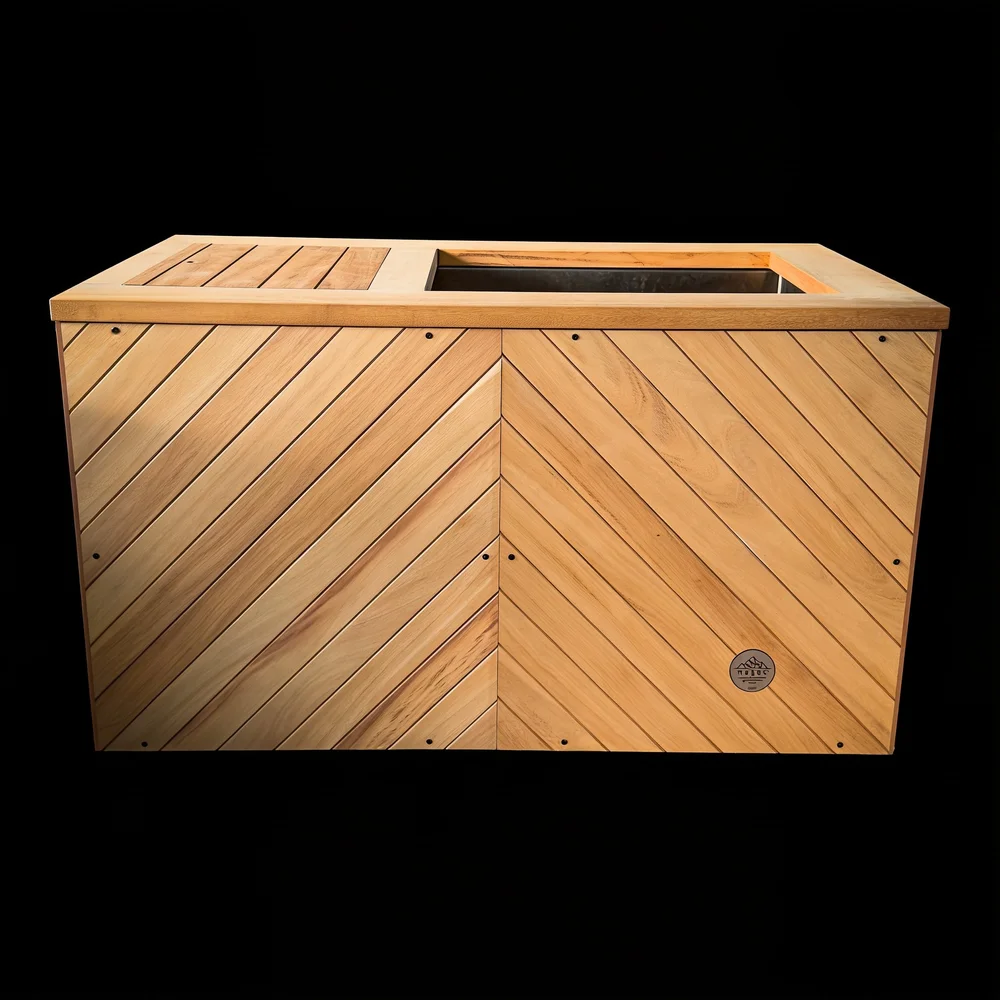
Free delivery and installation across Cyprus · 2-year warranty · 2-week return window
This guide is general information, not medical advice. Cold water immersion carries real risk. Speak with a qualified healthcare professional before starting, particularly if you have any heart, circulatory, neurological or respiratory condition, or if you are pregnant.