
Ice baths for football teams: what cold water immersion does between fixtures
Football clubs use ice baths to reduce muscle soreness and speed up perceived recovery between congested fixtures. The evidence supports soreness relief and use during fixture congestion, and is weaker on restoring physical performance. The practical dose is 11 to 15 minutes at 11 to 15 °C, kept away from strength sessions. We are Pagoc.Health Ice Baths, and we build club installations in Cyprus.
In short:
Cold water immersion has the strongest evidence base of the common recovery strategies in football, which is a statement about the competition as much as about the cold.
The effect that is well supported is on soreness and perceived recovery. The effect on measured performance the next day is contested.
Fixture congestion is the case that matters. Muscle injury rates rise measurably when matches come less than five days apart.
Dose it at 11 to 15 °C for 11 to 15 minutes, and keep it away from the strength work.
For a squad, the hard part is not the cold. It is holding one temperature, for thirty players, in water that stays clean.
Do football clubs actually use ice baths?
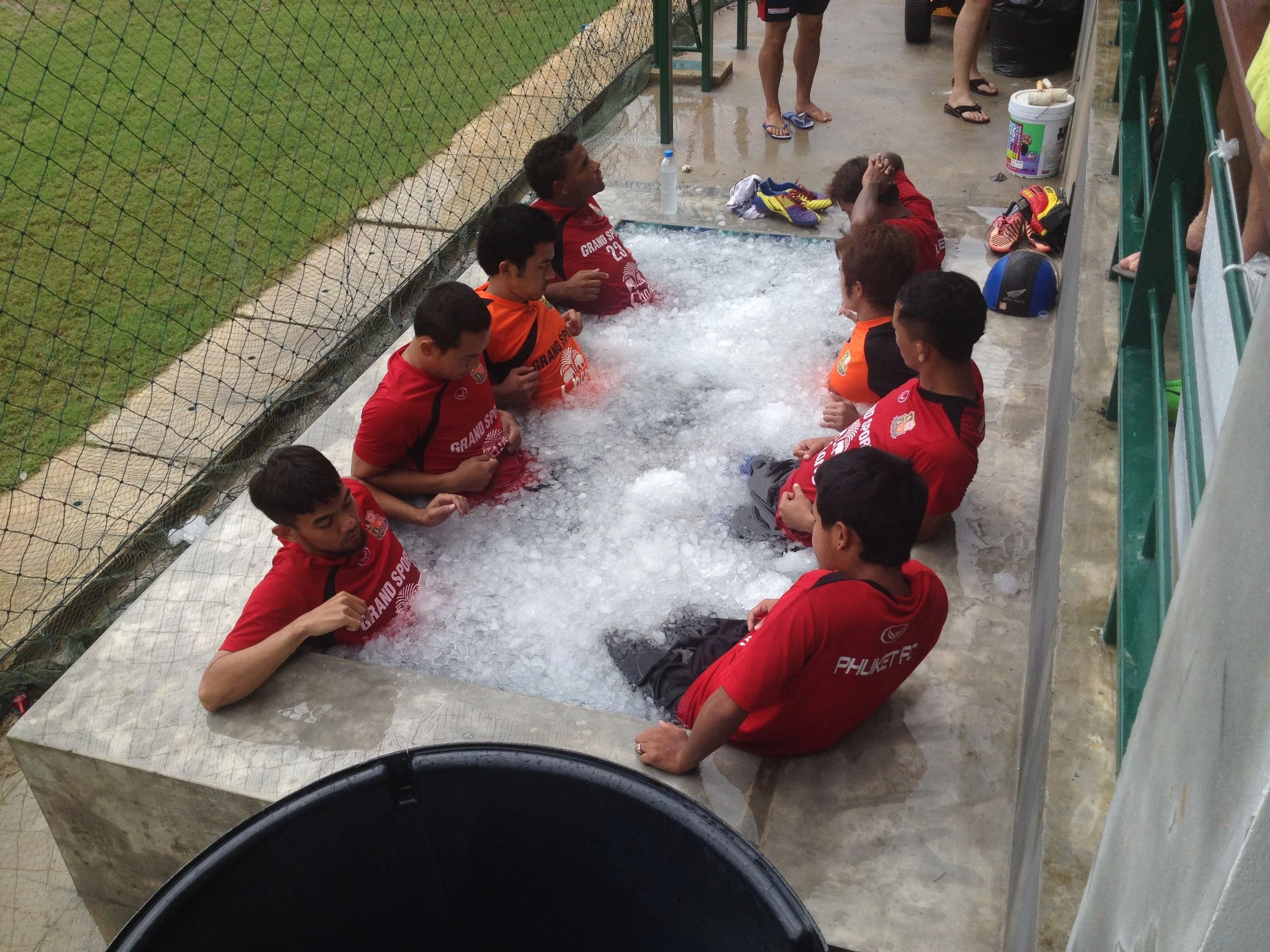
Yes. Cold water immersion is routine post-match recovery at professional clubs across Europe, and it has been for decades.
It is worth being precise about why, because “everyone does it” is not evidence. In their 2013 review of recovery strategies in soccer, Nédélec and colleagues assessed nutrition, cold water immersion, sleep, active recovery, stretching, compression garments, massage and electrical stimulation. Cold water immersion came out as effective during acute periods of match congestion. For most of the others, the review found the evidence to accelerate return to baseline performance was still lacking.
That is the honest version of “the elite already do this”. Cold water immersion is not universal because it is magic. It is universal because it is the recovery tool with the least bad evidence base, it is cheap to run once installed, and players will actually do it.
What does cold water immersion do for a footballer?
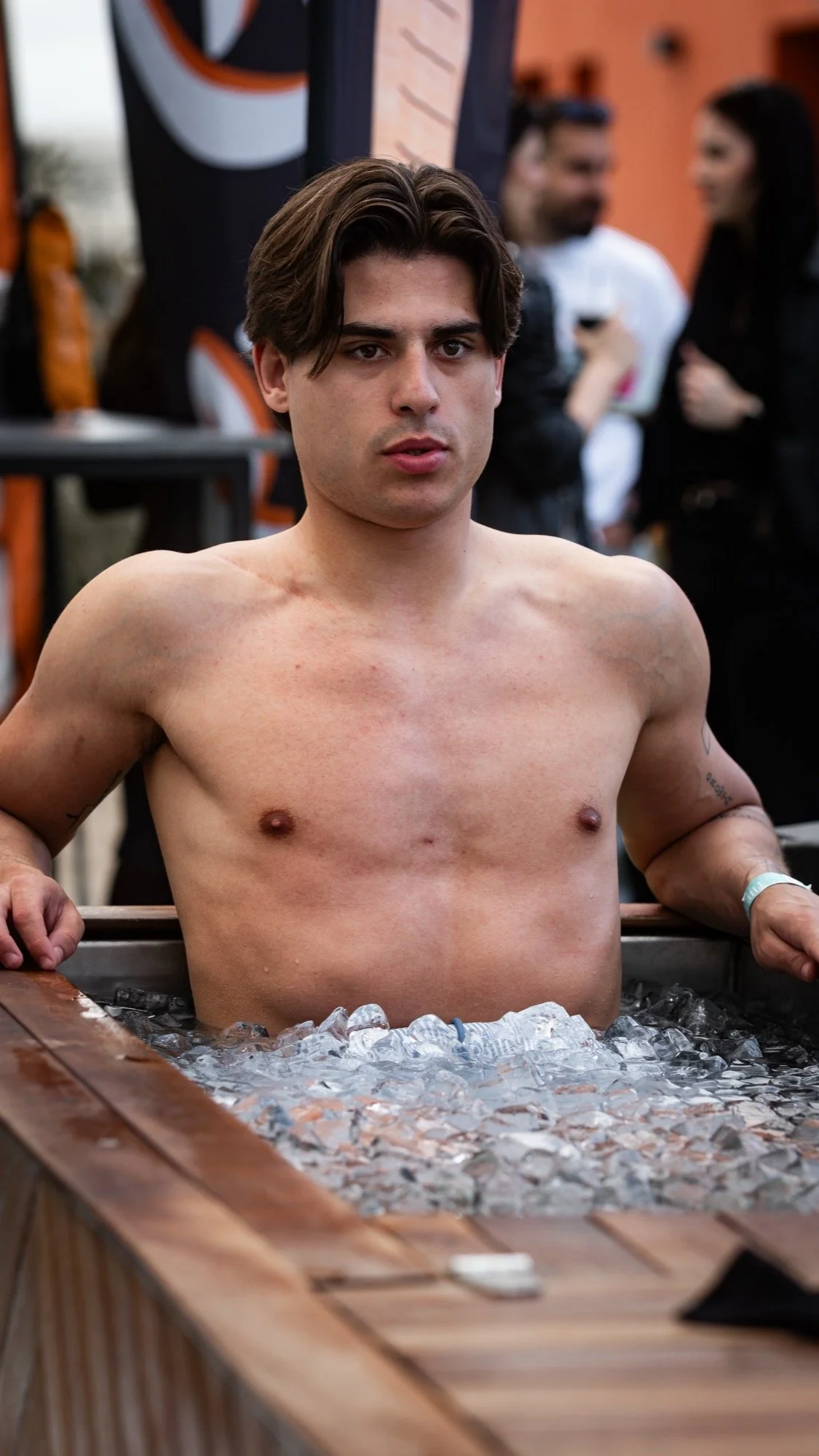
The best supported effect is a reduction in delayed onset muscle soreness in the days after a hard match or session.
The reference point is a Cochrane systematic review (Bleakley et al., 2012), which pooled 17 trials covering 366 participants and found cold water immersion reduced delayed onset muscle soreness compared with passive rest, with the effect present at 24, 48, 72 and 96 hours. The authors described this as “some evidence”, and that phrasing is theirs, not a hedge we added. Effects were larger in running-based exercise, which is the relevant mode for football.
What that buys a club is narrower than most marketing suggests, and more useful. A player who is less sore trains better the next day, complains less, and is more likely to complete the session as planned. Soreness is not a performance metric, but it is an adherence and training-quality metric, and over a congested month those compound.
Why does fixture congestion make recovery a squad availability problem?
Because muscle injury rates go up when matches come closer together, and muscle injuries are the ones that cost a club its best names.
The UEFA Champions League injury study followed 27 clubs over 11 seasons (Bengtsson, Ekstrand and Hägglund, 2013). League matches played with four or fewer days of recovery carried a 32 % higher muscle injury rate than matches with six or more days of recovery (RR 1.32, 95 % CI 1.15 to 1.51), concentrated in hamstring and quadriceps injuries. Total injury rate rose more modestly (RR 1.09). A later 14-year follow-up from the same group found the same pattern for matches played within five days.
The decision that follows is not “buy an ice bath and injuries stop”. No recovery intervention has been shown to do that. It is that the congested block is the part of the season where recovery gets managed deliberately rather than left to chance, and cold water immersion is the intervention with the best evidence for exactly that window.
What temperature should a football team’s ice bath be, and for how long?
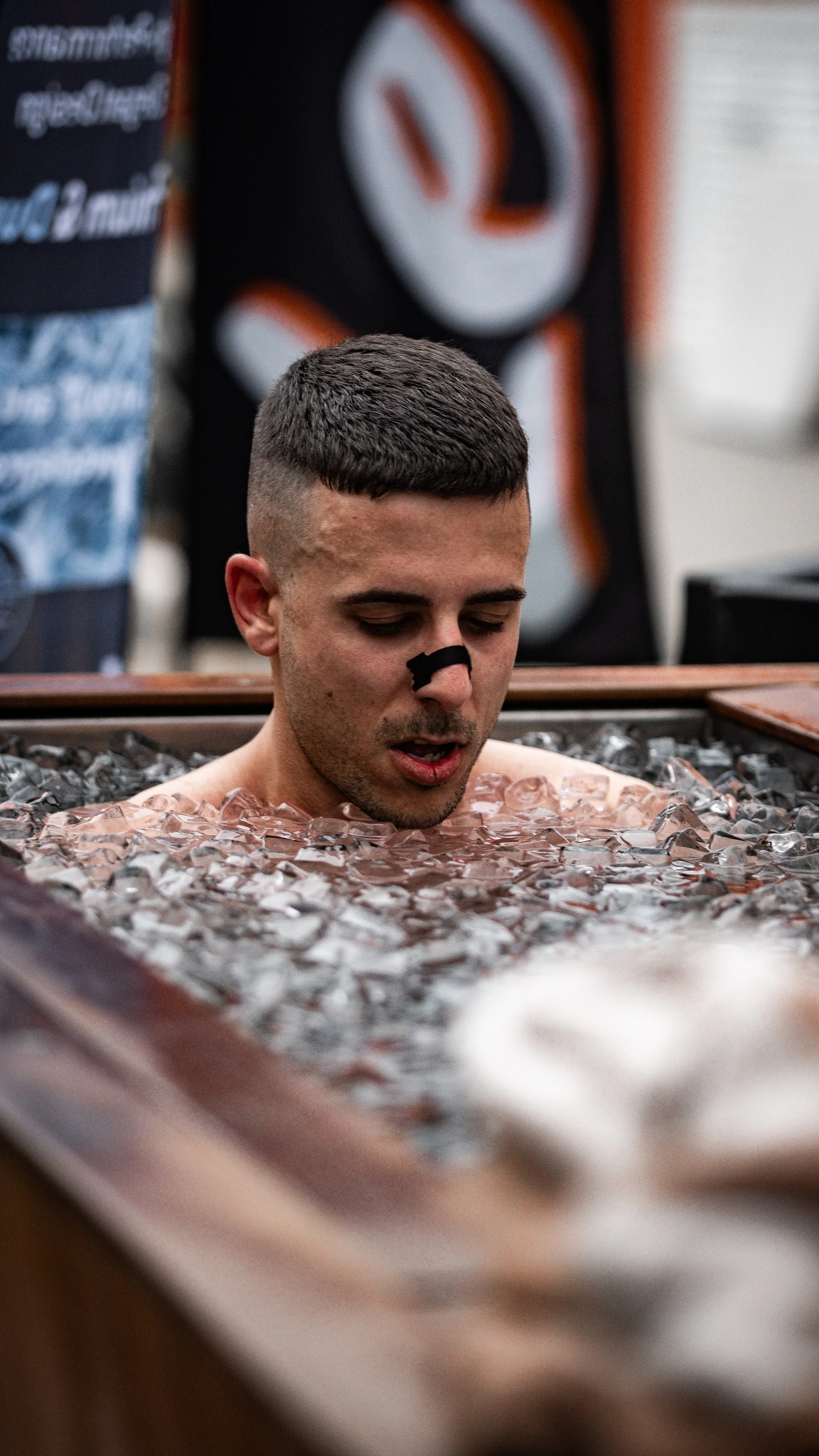
11 to 15 °C for 11 to 15 minutes is the dose with the best supporting evidence.
That range comes from a systematic review and meta-analysis by Machado and colleagues (2016, Sports Medicine), the first to test water temperature and immersion time as variables rather than treating cold water immersion as one thing. They found a dose-response relationship, with water between 11 and 15 °C and immersion of 11 to 15 minutes producing the best results for muscle soreness.
Two things follow for a club, and they are the reason this section exists.
Colder is not better. A squad going into 4 °C water because it feels more serious is not running a better protocol, it is running a different and less supported one, with a shorter tolerable exposure and a worse compliance rate.
A range is only a protocol if you can hold it. “Somewhere around 12 degrees” is not a dose. Thirty players cycling through a tub of melting ice means the first player and the last player did two different sessions, and neither of them was the one in the study. A Pagoc.Health ice bath holds the set temperature within ±0.5 °C, flat across its range, which is what turns a number in a paper into a protocol a physio can actually run.
This is not medical guidance. Cold water immersion has real contraindications, and a club should run its protocol through its own medical staff.
When should players not use an ice bath?
Straight after strength work, if the goal of that session was to build strength or muscle.
Roberts and colleagues (2015, Journal of Physiology) had 21 physically active men strength train for 12 weeks with either cold water immersion or active recovery after every session. Strength and muscle fibre size increased more in the active recovery group. The proposed mechanism is that cold immersion blunts the anabolic signalling that the training session was meant to trigger. Post-exercise inflammation is partly the adaptation signal, and cooling it down cools that too.
This is not one study. A 2024 systematic review and meta-analysis (Piñero and colleagues, European Journal of Sport Science) pooled eight trials and found post-exercise cold water immersion attenuated the muscle growth that resistance training produced. In those trials the cold went on between three and fifteen minutes after the session, which is exactly when a squad would use it.
The timing is the whole point, and it gives a usable rule. The American College of Sports Medicine’s guidance for blocks aimed at strength and hypertrophy is to delay cold water exposure by four to six hours after training. That keeps the soreness and perceived-recovery benefit and lets the adaptation signal do its work first.
For a football club this is a scheduling rule, not a reason to skip the bath:
After a match, or during a congested run: the goal is turnaround, not adaptation. Cold water immersion fits, and it goes on straight away.
After a heavy gym or strength session in a development block: leave four to six hours, or skip it that day. The adaptation is the point of that session.
Pre-season and long training blocks with no fixture pressure: the case is weakest, and this is where a club is most likely to be using the bath out of habit.
Very few people selling ice baths will tell a club this. It is the single most useful thing in this article and it is the reason we would rather write it than let someone else.
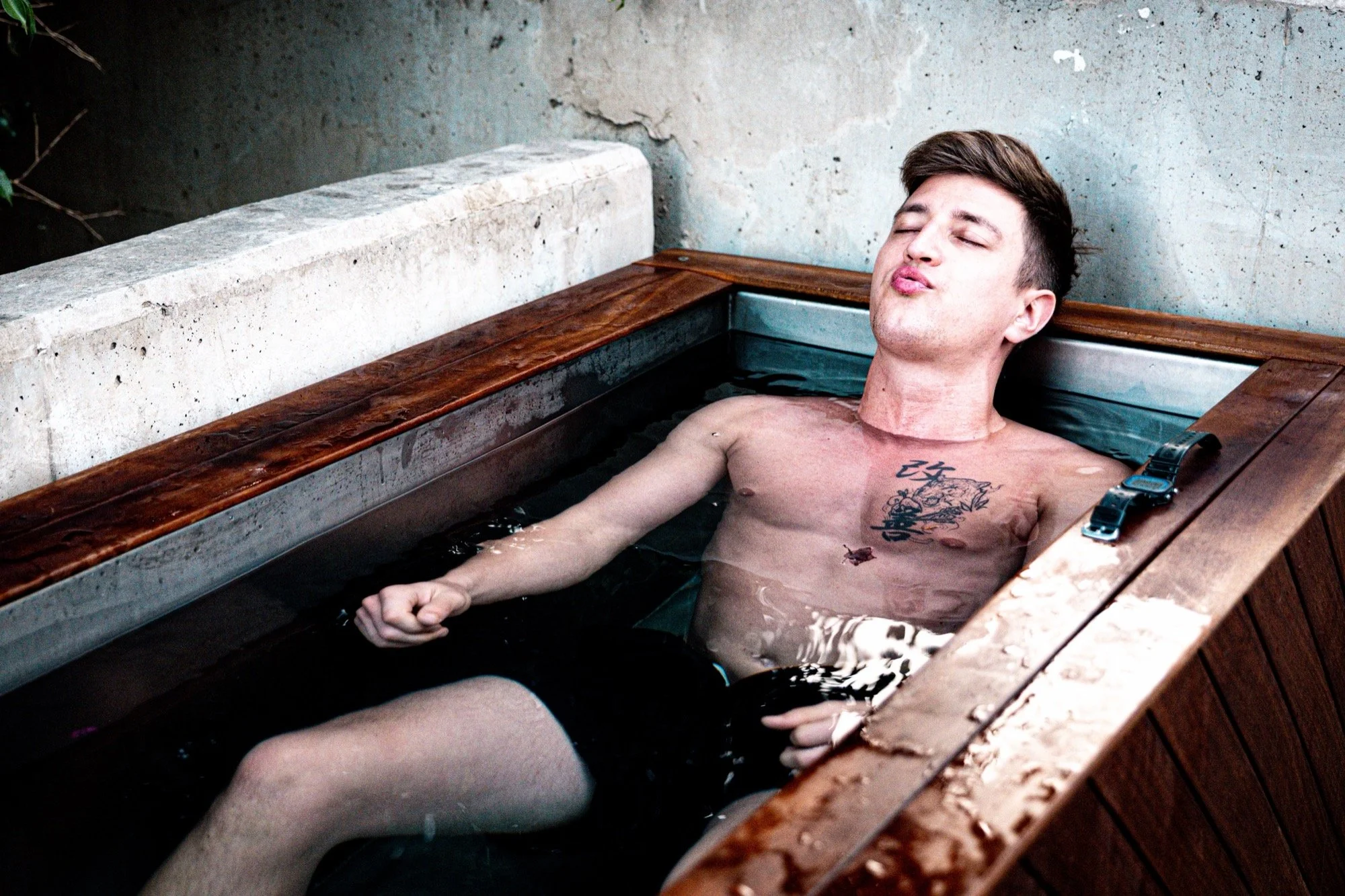
Does the research all agree?
No, and the strongest dissent is recent and specifically about footballers.
Gustafsson and colleagues (2025, European Journal of Applied Physiology) tested cold water immersion (10 °C for 10 minutes) against hot water immersion and against a sham-laser placebo in 40 national-level academy soccer players after a 90-minute simulated match, plus a 15-week arm applying the modalities roughly twice weekly. Their conclusion: compared with placebo, cold water immersion did not improve post-match recovery of physical performance and did not affect long-term training adaptations.
That is a real result and we are not going to hide it on a page about whether clubs should buy ice baths.
Here is how it fits with everything above rather than cancelling it. The Cochrane finding is about soreness, and soreness is a perception. The Gustafsson finding is about measured physical performance, and it says the belief-driven part of the effect is doing a lot of the work. Both can be true, and if you read the literature honestly they probably both are: cold water immersion reliably makes players feel recovered, and does less than the category claims to their sprint times the next morning.
Which leaves a club with an honest question rather than a marketing one. Feeling recovered is not nothing. It changes what a player is willing to do in the next session, it is the reason the practice survived at elite level long before anyone ran a placebo arm, and no club is going to stop players getting in cold water on the strength of one trial. The decision in front of a club is not whether cold water immersion happens. It is whether it happens at a controlled temperature, in clean water, the same way every time. That is the part we can actually affect, and it is the only part we sell.
What does a club need from an ice bath that a home unit does not?
Throughput, water hygiene, temperature stability under repeated entry, and a build that survives daily use across a full season.
A domestic bath serves one or two people a day. A squad puts twenty to thirty bodies through the same water inside an hour, after a match, in Cyprus heat. That changes which parts of the machine are load-bearing. What we build to:
One temperature, every player, every session: a digitally held setpoint, accurate to ±0.5 °C, flat across the range.
Water that stays clean through a full squad: UV and particle filtration integrated, and upgraded again on our commercial line.
Cold that is ready before the squad arrives: the bath holds its setpoint between sessions rather than being cooled from scratch each time.
A water side that survives a decade of use: stainless steel construction on the wetted side across the range.
Something that looks like club property, not equipment: Iroko hardwood cladding, chosen for looks and for a life around cold water, cut and finished by hand in our workshop.
A physio who can set it up remotely: WiFi and mobile app control on Core, Peak and their commercial variants.
Support when it matters mid-season: built in Cyprus, EU certified, a 2-year warranty, and free delivery and installation island-wide, including multi-unit club installs.
The one that catches clubs out is filtration. A squad bath without real water treatment becomes a hygiene problem inside a fortnight, and a hygiene problem is how a recovery protocol quietly stops being used.
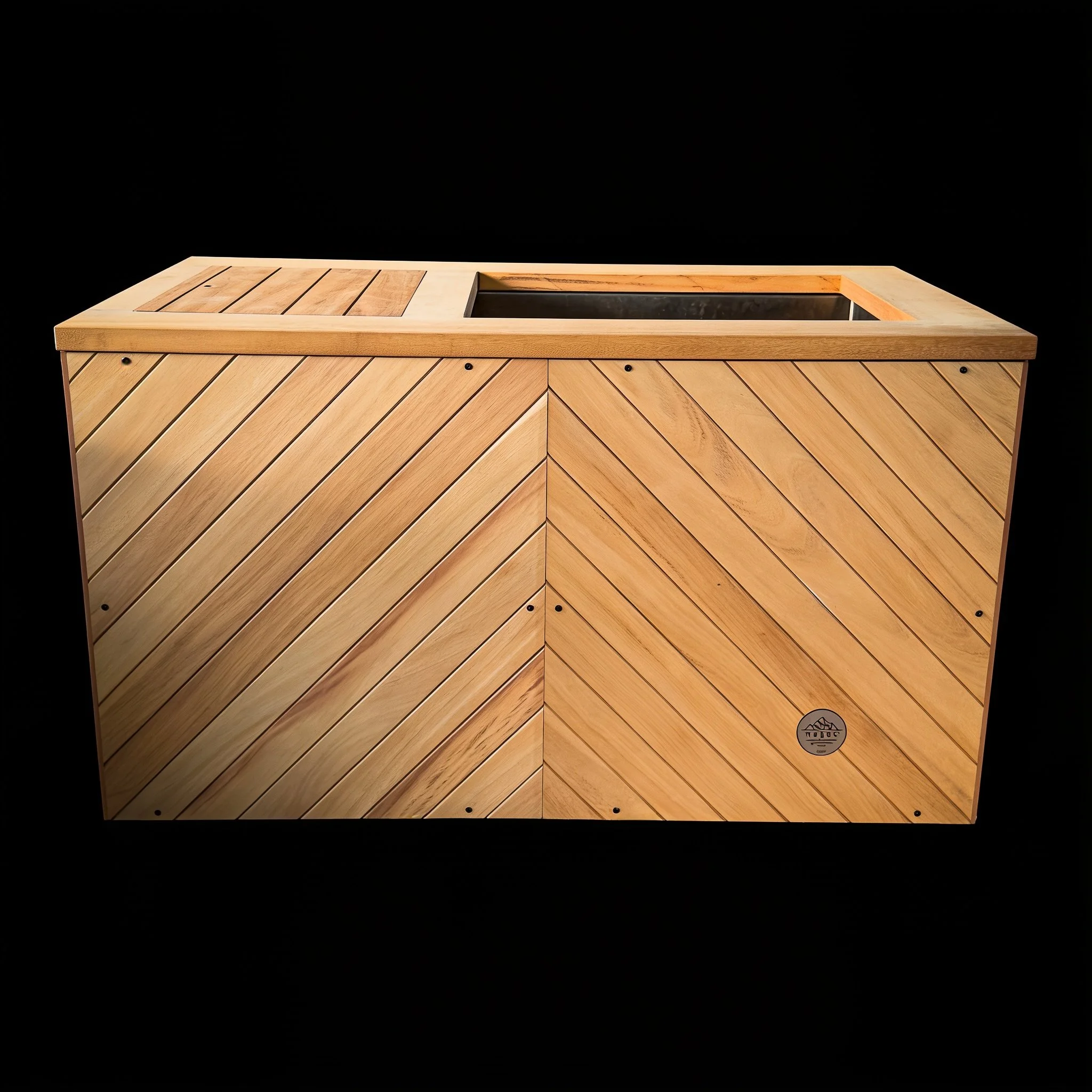
What does a club installation cost?
It depends on the number of stations and the fit at your training ground, so we quote it per club rather than publishing a price list.
Pagoc.Health Ice Baths builds a commercial line with upgraded filtration and refrigeration for multi-user, high-frequency use, in the same three sizes as our home range. Single-unit, multi-unit and custom training-ground setups are all built to the same standard. What we publish is our home range and its pricing, which is a reasonable reference point for the build quality but not the right specification for a squad.
The practical next step is a site visit. We look at the space, the power, the drainage and how many players need to cycle through, then give you a specification, a price and a lead time. No obligation, and no charge for the visit anywhere in Cyprus. Delivery and installation are free island-wide, including multi-unit club setups.
So should a club buy one?
If your squad is already getting into cold water after matches, then yes, because the version you are running now is not the one in the studies.
If your squad is not doing cold water immersion at all, the honest answer is that an ice bath is not the first thing to fix. Sleep, nutrition and the training load itself all outrank it, and any physio will tell you the same. Cold water immersion is a good tool inside a recovery plan and a poor substitute for one.
We would rather say that and be trusted on the rest.
Book a club consultation and we will come and look at your setup.
Frequently asked questions
Do football teams use ice baths?
Yes. Cold water immersion is routine post-match recovery at professional football clubs across Europe. A 2013 review of recovery strategies in soccer found cold water immersion effective during acute periods of fixture congestion, while evidence for several other common strategies was lacking.
What temperature should an ice bath be for footballers?
11 to 15 °C. A 2016 systematic review and meta-analysis found water between 11 and 15 °C, with an immersion time of 11 to 15 minutes, produced the best results for muscle soreness. Colder water is not better, and it shortens the tolerable exposure.
How long should a footballer stay in an ice bath?
11 to 15 minutes, based on the same 2016 meta-analysis. That is the recovery dose after a match or a hard session, and it is longer than the short 30 to 60 second dips used for general cold exposure practice.
Do ice baths reduce muscle soreness after a match?
Yes. A Cochrane systematic review of 17 trials covering 366 participants found cold water immersion reduced delayed onset muscle soreness compared with passive rest, at 24, 48, 72 and 96 hours after exercise. The review authors described the finding as “some evidence”.
Do ice baths prevent injuries in footballers?
No study shows that. What is documented is that muscle injury rates rise with fixture congestion: the UEFA Champions League injury study found a 32 % higher muscle injury rate in league matches played with four or fewer days of recovery compared with six or more. Cold water immersion is a recovery tool used in that window, not an injury-prevention intervention.
Do ice baths affect muscle and strength gains?
Yes, if taken immediately after lifting. A 2015 study in the Journal of Physiology found 12 weeks of cold water immersion after strength sessions produced smaller gains in strength and muscle fibre size than active recovery, and a 2024 meta-analysis of eight trials found the same blunting of muscle growth. In those trials the cold was applied three to fifteen minutes after the session.
How long should you wait to use an ice bath after weight training?
Four to six hours. That is the American College of Sports Medicine’s guidance for training blocks aimed at strength and hypertrophy, and it is designed to keep the soreness and recovery benefit without blunting the adaptation the session was meant to produce. After a match, where the goal is turnaround rather than adaptation, there is no reason to wait.
Is the evidence for ice baths in football conclusive?
No. A 2025 placebo-controlled trial in national-level soccer players found cold water immersion was no better than a sham treatment for restoring physical performance after a simulated match or for long-term training adaptation. The soreness and perceived-recovery effects are better supported than the performance effects.
How many players can use one ice bath?
It depends on the model and the protocol, but the limiting factor for a squad is water hygiene and temperature recovery between entries, not tub size. Commercial units carry upgraded filtration and refrigeration for that reason. Larger squads are usually served by a multi-unit setup.
Where are Pagoc.Health ice baths made?
In our own workshop in Cyprus. Delivery and installation are free island-wide, units are EU certified and carry a 2-year warranty.
References
Bleakley C, McDonough S, Gardner E, Baxter GD, Hopkins JT, Davison GW. Cold-water immersion (cryotherapy) for preventing and treating muscle soreness after exercise. Cochrane Database of Systematic Reviews, 2012.
Nédélec M, McCall A, Carling C, Legall F, Berthoin S, Dupont G. Recovery in soccer: part II, recovery strategies. Sports Medicine, 2013.
Bengtsson H, Ekstrand J, Hägglund M. Muscle injury rates in professional football increase with fixture congestion: an 11-year follow-up of the UEFA Champions League injury study. British Journal of Sports Medicine, 2013.
Machado AF, Ferreira PH, Micheletti JK, et al. Can water temperature and immersion time influence the effect of cold water immersion on muscle soreness? A systematic review and meta-analysis. Sports Medicine, 2016.
Roberts LA, Raastad T, Markworth JF, et al. Post-exercise cold water immersion attenuates acute anabolic signalling and long-term adaptations in muscle to strength training. Journal of Physiology, 2015.
Piñero A, Burke R, Augustin F, et al. Throwing cold water on muscle growth: a systematic review with meta-analysis of the effects of post-exercise cold water immersion on resistance training-induced hypertrophy. European Journal of Sport Science, 2024.
Cullen MFL, Davis BA. Cold Water Immersion: Friend or Froze? American College of Sports Medicine, 2023.
Gustafsson J, Montiel-Rojas D, Romare MGA, et al. Cold- and hot-water immersion are not more effective than placebo for the recovery of physical performance and training adaptations in national level soccer players. European Journal of Applied Physiology, 2025.